Among the historical and natural wonders of southern Sardinia, Acquafredda Castle, located in the municipality of Siliqua, is a fascinating destination that brings together medieval history, mysterious legends and landscapes of extraordinary beauty.
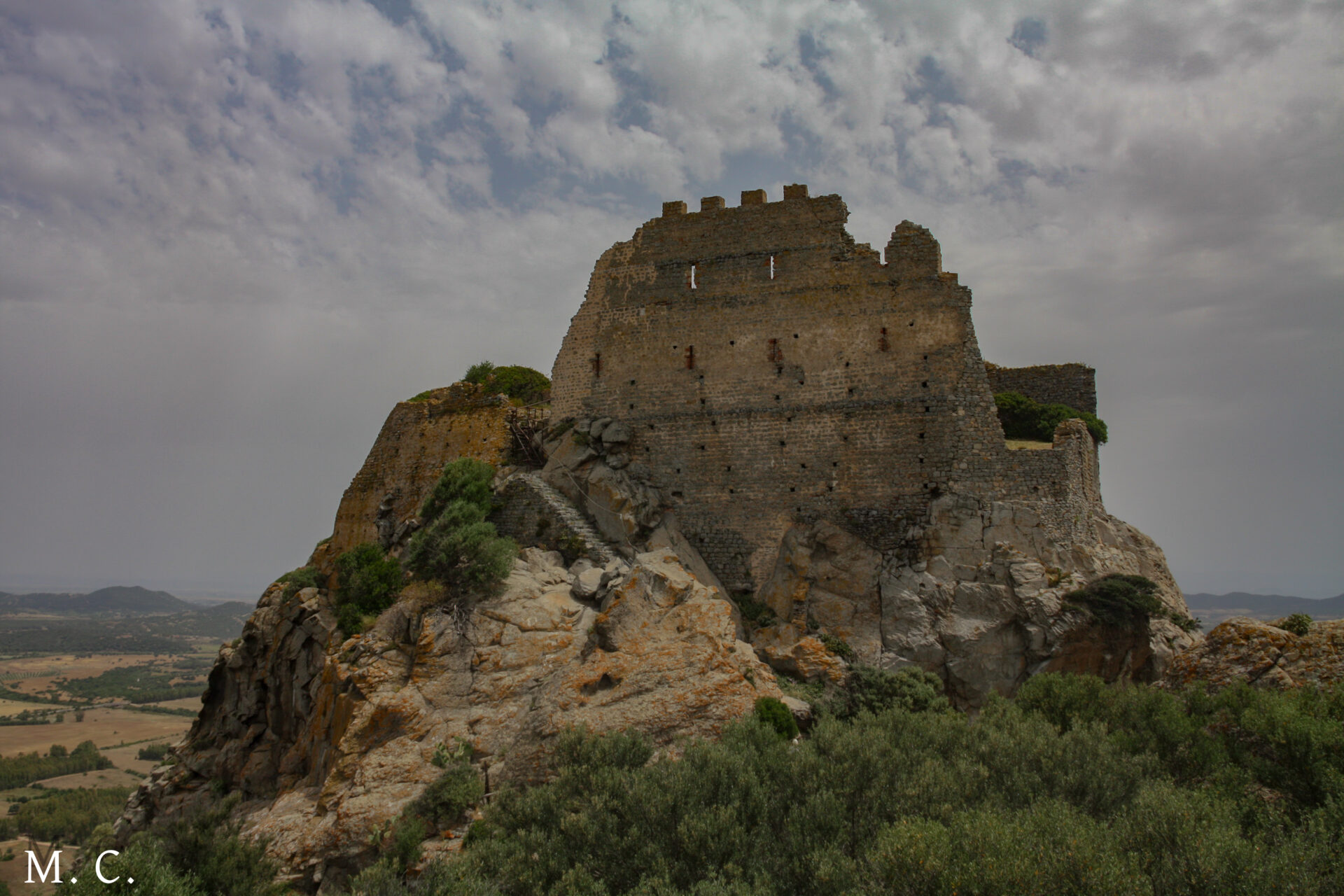
Perched on top of a volcanic hill, approximately 256 metres above sea level, the Acquafredda Castle overlooks the picturesque Cixerri Valley and offers visitors spectacular panoramic views. On clear days, the scenery stretches as far as the sea, the Cagliari lagoons and the territories of Marmilla and Iglesiente.
Its ancient walls, still visible despite the passage of centuries, tell a story of power, battles, intrigues and historical figures, including the famous Count Ugolino della Gherardesca, immortalised by Dante Alighieri in the Divine Comedy.
Where is Acquafredda Castle?
TheAcquafredda Castle is located approximately 4 kilometres from the town centre of Siliqua, in south-western Sardinia.
The fortress stands on an isolated volcanic hill, easily recognisable from a considerable distance thanks to its commanding position over the surrounding plain.
The hill reaches an altitude of approximately 256 metres and can be climbed via a walking trail that gradually reveals the different structures of the fortified complex.
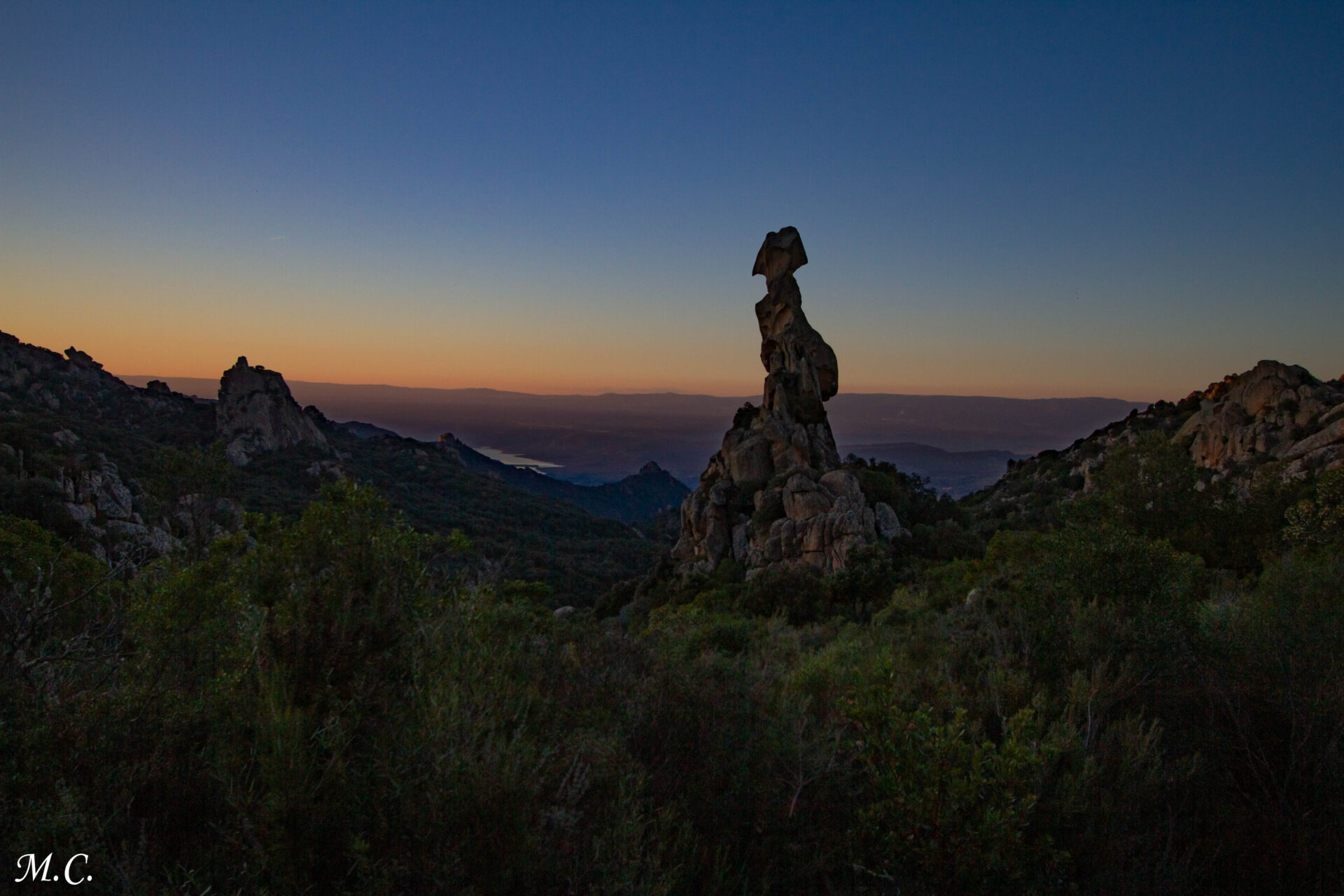
The ascent offers an opportunity to immerse yourself in a beautiful natural setting, where traces of the past blend with Mediterranean vegetation and the wide-open views of the Cixerri Valley.
Once at the top, visitors are rewarded with extraordinary panoramic views. On clear days, it is possible to admire not only the valley below but also distant landscapes, reaching as far as the lagoons around Cagliari and the sea.
The History of the Castle: From Medieval Origins to Decline
The origins of Acquafredda Castle date back to the 13th century. Tradition attributes its construction to Count Ugolino della Gherardesca, a Pisan nobleman who exercised his power over part of south-western Sardinia following the fall of the Giudicato of Cagliari.
Although the connection with Count Ugolino is deeply rooted in local historical memory, in the absence of definitive documentary evidence, the construction of the fortress is generally dated to the second half of the 13th century.
Its strategic position on the hill allowed it to control an important territory and oversee the surrounding valley.
The Acquafredda Castle was not merely a defensive structure but a fully organised settlement, designed to accommodate soldiers, animals, supplies and everyday activities.
After Count Ugolino‘s death in 1288, the castle came under Pisan control.
It subsequently became part of the Aragonese possessions, remaining under their control from 1326 to 1410.
Over time, the Acquafredda Castle gradually lost its original function and was probably no longer permanently inhabited.
The surrounding lands and the Acquafredda Castle then passed into the hands of various feudal families, until they were redeemed in 1785 by King Victor Amadeus III of Sardinia.
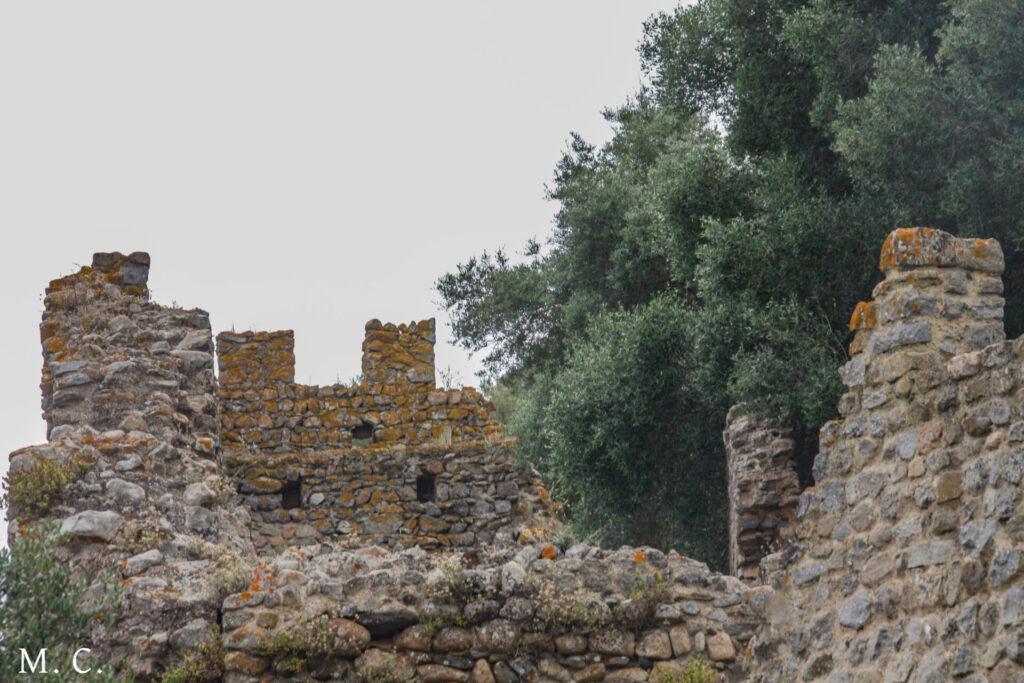
Today, the complex is largely in ruins, but its surviving structures still reveal the architectural and strategic importance of this ancient fortress.
How Was the Fortress Organised?
TheAcquafredda Castle was a complex settlement, featuring areas dedicated both to defence and everyday life, indeed within its walls stood a small village containing houses, warehouses, stables, cisterns, mills and olive presses.
This organisation allowed the community living within the fortress to carry out its daily activities, even in difficult conditions.
At the highest point of the hill stood the keep, the main core of the fortress and the residence of the castle’s governor, located at approximately 253–256 metres above sea level.
The building was arranged over several levels and originally included two floors above ground, an upper terrace and an underground chamber used as a water cistern.
The latter represents one of the most interesting examples of the solutions adopted to ensure the castle’s independence and water supply.
Access to the keep was provided by a drawbridge leading into an area around which the internal rooms were arranged.
Despite the damage caused by time, two important sections of the masonry walls remain visible, facing north-west and south-east, reaching approximately 20 metres in height.
At the top, the remains of the characteristic Ghibelline-style battlements can still be distinguished, helping visitors imagine the original appearance of the building.
Opposite the keep stands the Watchtower, located at approximately 248 metres above sea level, it was locally known as Torre de s’impicadroxiu, meaning the Tower of the Hanged Man, it is associated with the tradition that it was once used to hold prisoners.
The system of towers, walls and service buildings still bears witness to the complexity of a fortress designed to dominate the surrounding territory and protect its inhabitants.
Count Ugolino and the Legend of the Tower of Hunger
The fame of Acquafredda Castle is closely connected to the figure of Ugolino della Gherardesca, one of the most controversial characters in Italian medieval history, indeed, according to tradition, the count commissioned the fortress and made it an important centre from which to control his Sardinian territories.
His personal story, however, is primarily associated with one of the most tragic episodes in Italian literary history.
After falling out of favour in Pisa, Ugolino was imprisoned in the Tower of the Gualandi, also known as the Tower of Hunger, together with his sons and grandsons, where he died in 1288, following a long imprisonment during which he was allegedly left to starve.
The most dramatic version of the legend tells that, overwhelmed by despair, the count eventually fed on the bodies of his own children.
This terrible episode earned him the nickname of the “Cannibal Count”, although the story belongs to a literary and legendary tradition whose interpretation has long been debated.
The story is recounted by Dante Alighieri in Canto XXXIII of the Inferno, one of the most powerful passages in the Divine Comedy.
The connection between Ugolino and Acquafredda Castle adds to the mystery and fascination of the site, where the medieval ruins seem to preserve the echoes of distant and mysterious events.
Why Is It Called Acquafredda Castle?
The name of the fortress appears to derive from a particularly cool freshwater spring that flows among the rocky crevices at the base of the hill, that represents an important feature in an area where the availability of water has always played a fundamental role in human settlements, furthermore it reflects a natural characteristic of the area, directly linking the Acquafredda Castle to the surrounding landscape.
Together with the cisterns found within the fortress, the spring also highlights the importance of water supply in the daily life of a medieval community.
A Natural Heritage of Great Value
The Acquafredda Castle is not only an archaeological and historical site, but also a place of considerable natural interest, indeed the volcanic hill, the ancient stone walls and vegetation covering its slopes create a distinctive landscape that stands out against the surrounding plain.
The vegetation is typical of the Mediterranean scrubland, characterised by lentisk, wild olive, mock privet, juniper and tree spurge.
These species create an environment rich in scents and colours, particularly beautiful in spring and on bright, sunny days.
At the foot of the hill, there is also an area featuring pine reforestation, offering spaces suitable for walks and outdoor breaks, in accordance with the site’s visitor regulations.
Wildlife also contributes to the ecological value of the area,indeed here there are different bird species including the raven, jackdaw, barn owl, little owl, kestrel, common buzzard and lesser kestrel and this reflects the variety of habitats available and makes the hill an interesting destination for birdwatching enthusiasts.
The combination of geology, biodiversity and medieval remains makes this a place where a visit becomes an experience combining culture, nature and scientific discovery.
Visiting the Acquafredda Castle: An Experience Between History and Nature
A visit to the Acquafredda Castle is recommended for anyone who enjoys historical sites, hiking and beautiful natural landscapes, indeed the trail leading to the summit allows visitors to gradually approach the different structures of the Acquafredda Castle and observe the remains of the ancient settlement up close.
It is advisable to wear hiking boots or comfortable footwear suitable for uneven terrain, bring plenty of water and protect yourself from the sun, especially during the warmer months.
Before visiting, it is worth checking access conditions, opening hours and admission arrangements, as these may vary.
Admission to the site is subject to a fee.
The Acquafredda Castle deserves to be explored at a leisurely pace, allowing plenty of time to appreciate both the ruins and the surrounding landscape.
The tranquillity of the hill, the flight of birds and the sweeping views across the valley make the experience particularly memorable.
The Acquafredda Castle: A Must-See Destination in Sardinia
TheAcquafredda Castle is much more than an ancient fortress in ruins.
It is a place where Sardinia’s medieval history meets the wider events of Italian history, where the legend of Count Ugolino intertwines with the memory of the local territory and where nature enhances the beauty of every visit.
The surviving walls, the keep, the Torre de s’impicadroxiu and the remains of the ancient village tell the story of a community that lived on and controlled this strategic hill for centuries.
At the same time, Mediterranean vegetation, wildlife and the panoramic views over the Cixerri Valley give the site a value that goes far beyond its historical and architectural significance.
For anyone wishing to discover a lesser-known side of Sardinia, away from the island’s famous seaside destinations, Acquafredda Castle is a place capable of surprising and captivating visitors.
A place where every stone holds a story and every step towards the summit offers a new perspective on one of the most fascinating landscapes in southern Sardinia.
How to Get There
The Acquafredda Castle is located approximately 3–4 km from the centre of Siliqua.
From there, follow the road signs leading to the car park, which has a refreshment area at the foot of the hill.
From the car park, you will need to walk uphill along a trail of approximately 1 km, with an elevation gain of about 256 metres.
Coordinates: 39.26389, 8.81721 · Directions on Google Maps